back
back

【Editor's Note】Food is paramount for the people, and safety is paramount for food. Food safety is the foundation for the survival and development of the group catering industry and is directly related to the health of the vast number of diners. From September 22 to 28, the 2026 National Food Safety Awareness Week was carried out as scheduled, with this year's theme being "Uphold Virtue and Comply with the Law, Share Food Safety." To further standardize the operational behavior of employees in all company restaurants, consolidate the primary responsibility for food safety, eliminate food safety hazards, and build a solid safety defense line for group catering services, the following practical food safety knowledge, risk hazards, and emergency response standards aligned with kitchen operations are hereby compiled.
I. Core Definition of Food Safety and Work Principles
According to the provisions of the Food Safety Law of the People's Republic of China, food safety means that food is non-toxic and harmless, meets the nutritional requirements it should have, and does not cause any acute, subacute, or chronic harm to human health. Food safety work always adheres to the core principles of putting prevention first, risk management, full-process control, and social co-governance. For the group catering industry, controlling every link of ingredient procurement, processing, storage, and meal service throughout the entire process is the core key to avoiding food safety risks.
II. Four Key Points for Avoiding Food Safety Risks in Daily Operations
Minor oversights in daily kitchen operations can easily cause foodborne illness. All practitioners must strictly abide by operational standards and eliminate common safety hazards. Strictly implement the separation of raw and cooked foods; cutting boards, knives, and containers used for processing ingredients must be dedicated to specific uses; refrigerators must store raw and cooked ingredients in separate zones to avoid cross-contamination. Eliminate the misconception that the refrigerator is a "safe box": low temperatures below 5°C can only inhibit microbial reproduction and cannot kill bacteria; cooked food must not be stored at room temperature for more than 2 hours; refrigerated storage should not be too long; and reheating must heat food to above 70°C. Ingredients must be thoroughly cooked; meat, eggs, seafood, and other ingredients must not be eaten half-raw; cold dishes and fresh-cut fruits are recommended to be consumed within the same meal, and overnight storage must be avoided. Strictly observe hygiene standards: hands must be washed and disinfected after handling ingredients, using the toilet, contacting pets, or handling garbage.
III. Common Types of Food Poisoning and Preventive Measures
Common food poisoning is mainly divided into three major categories: microbial (including bacterial and fungal food poisoning), chemical, and poisoning from toxic animals and plants. Among them, bacterial food poisoning is the most frequent, mostly caused by contamination of ingredients with Salmonella, Staphylococcus aureus, and Bacillus cereus. It is more common in high-temperature seasons and easily causes symptoms such as abdominal pain, vomiting, and diarrhea.
To eliminate bacterial poisoning, all restaurants must strictly control the ingredient procurement gate and reject spoiled, moldy, or uninspected ingredients; standardize ingredient storage with protection against dust, rodents, and insects, and store raw and cooked foods in separate zones; practitioners must work with valid health certificates, and contact with ingredients is strictly prohibited when they are unwell or have skin injuries; ingredients must be thoroughly cooked, with the center temperature of large pieces not lower than 70°C; leftover meals must be refrigerated for no more than 24 hours and must be thoroughly reheated at high temperature before being eaten again.
At the same time, strictly prevent chemical food poisoning caused by toxic substances such as rat poison and nitrite. It is strictly prohibited to store rat poison and other toxic chemicals in ingredient storage areas; chemicals must be stored separately under lock; vegetables must be soaked and rinsed more than three times; fruits must be washed and peeled; and risks such as misuse of nitrite and chemical contamination of ingredients must be eliminated.
IV. Emergency Response Procedures for Food Poisoning
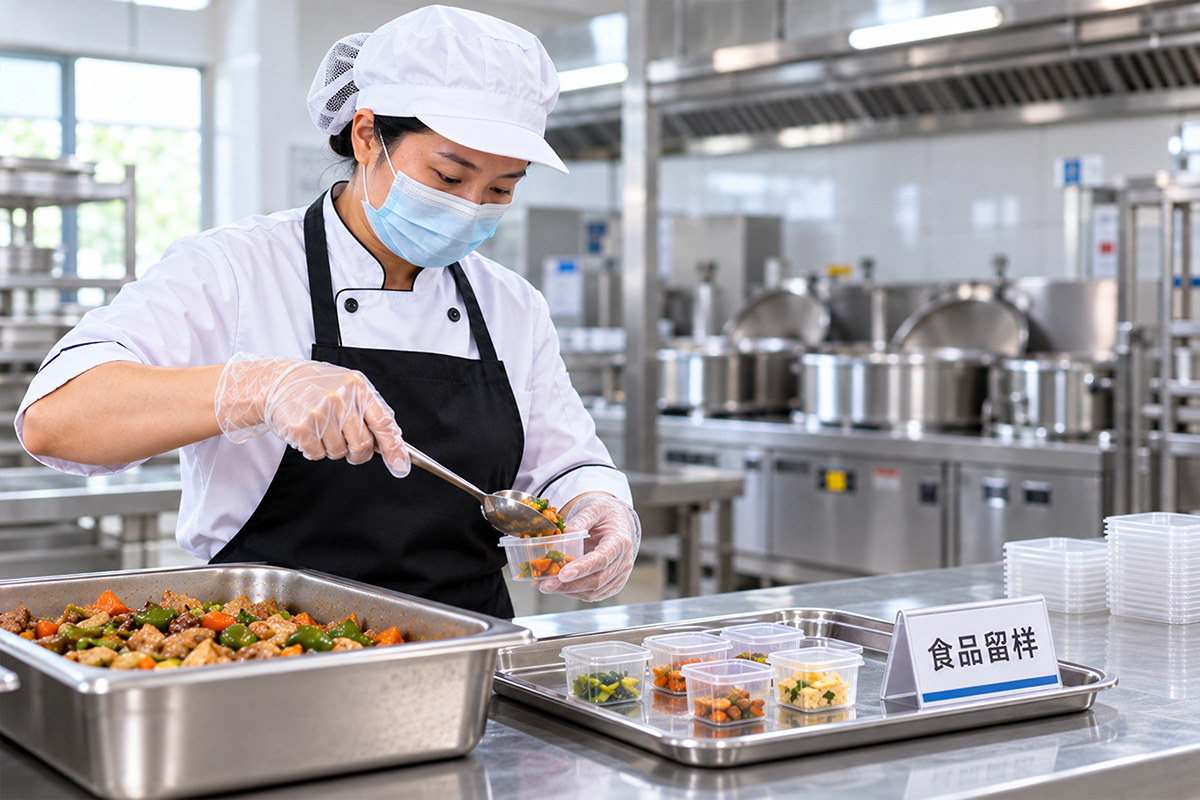
If a suspected food poisoning situation occurs, the restaurant must respond calmly and handle it in a standardized manner. Immediately stop eating and selling the suspected food, and properly retain samples of the remaining ingredients for testing; for people with mild discomfort, guide them to drink clean warm water to induce vomiting and expel toxins; if severe symptoms such as violent vomiting, diarrhea, dizziness, and fatigue occur, immediate medical treatment must be sought, and delay or self-treatment must be avoided, so as to minimize safety harm to the greatest extent.
【Conclusion】Food safety is no small matter, and responsibility is heavier than Mount Tai. Group catering service is an important part of people's livelihood services, and every kitchen practitioner is a guardian of food safety. "Upholding virtue and complying with the law" is not only an industry norm but also the professional bottom line of every employee. It is hoped that all employees will take this Awareness Week popular science learning as an opportunity, keep the string of food safety taut, strictly observe operational standards, investigate minor hazards, abide by professional ethics, and implement standardized operations in every detail of ingredient handling, processing and cooking, and storage and sample retention. With a rigorous, professional, and responsible work attitude, build a solid food safety protection net for all restaurants, safeguard the health of every diner, and jointly build a safe, reassuring, and high-quality catering service environment!