back
back

September 1 marks the autumn back-to-school season, and multiple school restaurants of the Group simultaneously launched back-to-school support work. With a new semester and a new starting point, the system management departments of each major region adhere to the dual-track approach of "personnel training" and "hazard inspection," safeguarding the "safety on the tip of the tongue" of teachers and students with higher standards and stricter requirements.
I. Training and Assessment First, Forging a Professional Food Safety Team
During the back-to-school preparation stage, the system management departments organized restaurant managers and head chefs to集中 study training-related content and simultaneously organized online food safety quizzes and assessments. Through training and assessment, the food safety directors and safety officers of each restaurant all obtained the corresponding training certificates, achieving certified and professionally competent food safety personnel, laying a solid food safety management foundation for back-to-school support.
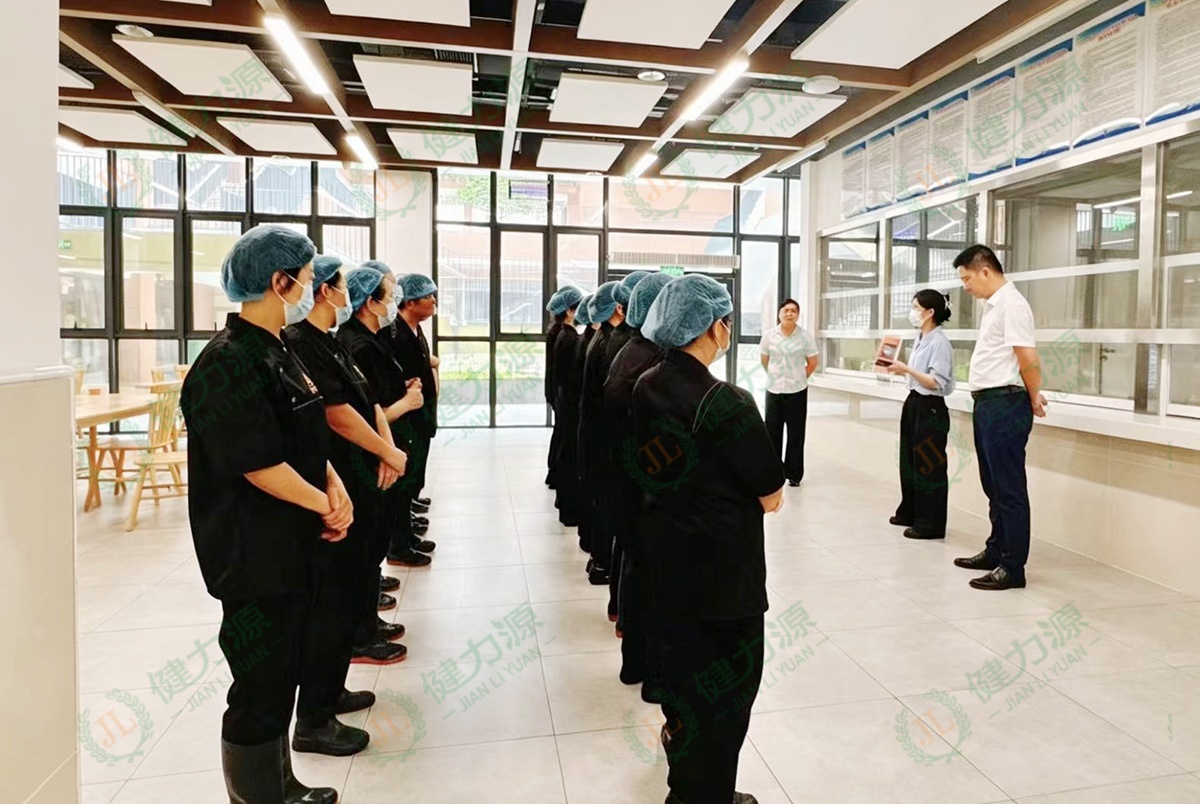
A school restaurant in Shenzhen conducts training for employees
II. Special Inspections and Rectification, Building a Solid Full-Process Safety Defense Line
Targeting the entire kitchen process, multiple special inspection and rectification tasks were implemented before the start of school, eliminating risk hazards across the entire chain from personnel, environment, facilities, raw materials, and sample retention to information disclosure:
1.Safeguard the personnel gate. Confirm that practitioners are on duty with the original A4 paper version of their health certificates, and that the certificates are within their validity period; strictly implement the daily pre-work morning inspection system, keep morning inspection records, and strictly prohibit personnel with physical abnormalities from working.
2.Safeguard the cleanliness gate. Complete environmental cleaning of the entire kitchen area, eliminating hygiene blind spots; carry out re-cleaning and thorough disinfection of all tableware and processing tools and utensils; carry out thorough cleaning, defrosting, and disinfection of refrigerators and cold storage, regularly verify equipment operating temperatures and keep temperature records, ensuring storage temperatures meet food safety specifications.
3.Safeguard the facilities gate. Comprehensively inspect the operating status of various kitchen equipment to ensure normal use; comprehensively inspect pest control facilities and confirm that rat-catching, fly-killing, and other facilities are intact and effective.
4.Safeguard the raw material gate. Comprehensively sort out ingredients in warehouse inventory, clear out expired, spoiled, and sensory-abnormal ingredients, properly classify and store ingredients, and implement the first-in-first-out management requirement.
5.Safeguard the sample retention gate. Comprehensively clean and disinfect sample retention boxes and sample retention refrigerators. The refrigeration temperature of sample retention refrigerators should be stably maintained at 0–5°C, and locked management should be implemented; food sample retention work must be carried out as soon as formal meal service begins. Even if the number of diners is small, the sample retention process cannot be omitted.
6.Safeguard the disclosure gate. Verify item by item the disclosure content on the front hall notice boards, promptly update disclosure documents such as practitioner health certificates, tableware testing reports, and ingredient testing reports, and ensure that disclosed materials are clear, authentic, and within their validity period.
III. Inspection Reception and Science Popularization in Parallel, Food Safety Classroom Kicks Off Splendidly
On September 1, a middle school restaurant in Beijing welcomed a comprehensive supervision and inspection by the Fengtai District Education Commission. The inspection team completed on-site rapid sampling tests of ingredients and tableware, and all test results were qualified, which was simultaneously fed back to the school, fully demonstrating the solid daily food safety control work of Jianliyuan restaurants.
On the day of meal service, the restaurant simultaneously carried out a "Food Safety Mini Classroom" themed activity. The school invited relevant leaders from the Fengtai District Education Commission to visit the restaurant site to guide the work. System staff explained the restaurant's relevant testing items on site and conducted ATP surface cleanliness testing on the leaders' hands. The leaders affirmed the organization and implementation of this food safety mini classroom and put forward suggestions for subsequent work: it is recommended to combine with the school's teaching curriculum arrangements to regularly carry out food safety science popularization education for students and enhance students' food safety awareness.
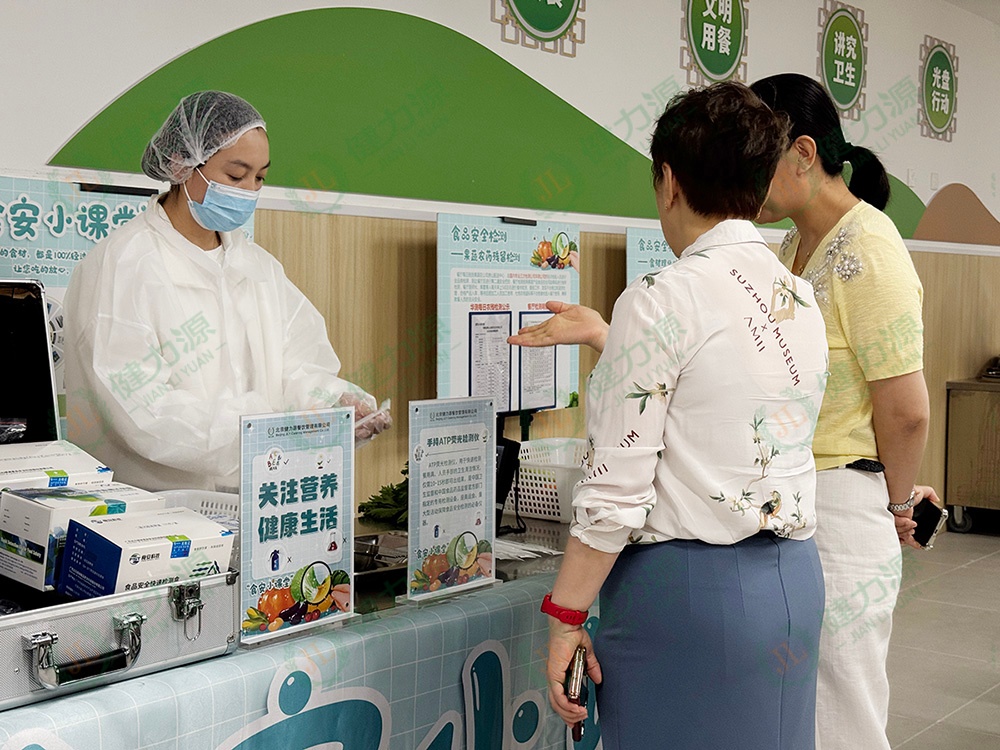
A school restaurant in Beijing opens a food safety mini classroom
Back-to-school season support is both a concentrated test and a new starting point. From training and assessment to special inspections, from back-to-school inspection reception to the food safety classroom, Jianliyuan advances campus food control with a professional and rigorous attitude, implementing the commitment to "safeguarding the dining safety of teachers and students" in every link.
In the future, Jianliyuan will continue to deepen the normalized mechanism of food safety science popularization, promote food safety management to be more refined, more transparent, and warmer, safeguard "safety on the tip of the tongue" on campus, give teachers and students peace of mind and parents reassurance, and fulfill the responsibility and commitment of a group catering enterprise.