back
back

【Editor's Note】This article is selected from the China Hospitality Association Expert Forum, "Seizing New Opportunities for Expanding Consumption in the 15th Five-Year Plan and Striving to Write a New Chapter in High-Quality Development of the Lodging and Catering Industry." Based on the "15th Five-Year Plan" for Expanding Consumption, the article focuses on the development trends of the catering industry and analyzes the development opportunities and practical paths brought by policies around key directions such as quality upgrading, digital transformation, green development, scenario innovation, and institutional safeguards. For group catering enterprises, the content on standards development, brand cultivation, cost reduction and efficiency improvement, and convenient services is highly valuable for reference. It helps us understand policy orientation, benchmark against advanced industry thinking, promote quality and efficiency improvement in group catering operations, and support the Group in achieving high-quality development.
The "15th Five-Year Plan" for Expanding Consumption approved by the State Council, as a programmatic document guiding the development of the consumption field over the next five years, positions service consumption as an important engine for expanding consumption and clarifies for the lodging and catering industry the development direction of quality orientation, digitalization, greening, and integration. Based on a systematic interpretation of the text of the Plan, this article deeply analyzes the strategic opportunities and development paths faced by the lodging and catering industry during the "15th Five-Year Plan" period from five dimensions: policy positioning, quality upgrading, endogenous driving forces, scenario innovation, and institutional safeguards. The study believes that industry entities should transform policy dividends into endogenous capabilities, and through digital empowerment, brand-based operations, green transformation, and cross-sector integration, achieve a paradigm shift from scale expansion to quality and efficiency, playing a greater role in the process of upgrading and improving service consumption.
I. Identifying Direction: The Plan Sets New Coordinates for the Lodging and Catering Industry
The Plan, based on the strategic height of building a new development pattern, positions service consumption as an important engine for expanding consumption. In its "Overall Requirements," the Plan clearly states that it is necessary to conform to the trend of consumption upgrading, improve traditional consumption, cultivate new types of consumption, expand service consumption, and emphasizes leading and creating new demand with high-quality supply. This places the lodging and catering industry, from the top-level design, in a key position for boosting consumption, improving people's livelihood, and enhancing endogenous momentum.
From the perspective of policy effects, the Plan releases three positive signals for the lodging and catering industry. First, status is reaffirmed. As a core segment of service consumption, lodging and catering are directly related to the people's rigid demand for "food and accommodation" and their experience of a better life. The Plan clearly proposes promoting the upgrading of consumer services toward high quality and diversification, meaning that the industry's weight in the national economic system is further increased. Second, direction is further clarified. The Plan sets quantitative and qualitative goals for improving and expanding service consumption and encourages chain-based, brand-based, digital, and green development. This provides a path for the industry to break the "low-end, small-scale, and scattered" dilemma and move toward intensive and efficient development. Third, safeguards are further consolidated. The Plan makes arrangements in areas such as optimizing the consumption environment, improving the standards system, and strengthening factor support, directly addressing long-standing pain points in the business environment faced by the industry and helping systematically reduce institutional transaction costs. It can be said that the Plan is not only a task statement but also a highly valuable policy toolbox. Lodging and catering enterprises should carefully study it, benchmark against it item by item, and translate policy language into corporate action.
II. Quality First: Anchoring New Requirements for Upgrading Service Consumption
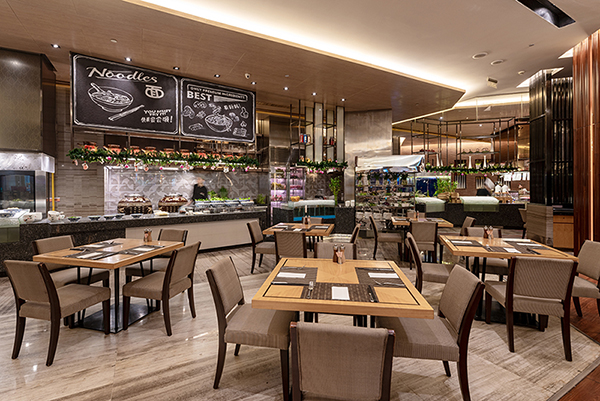
The Plan lists the upgrading and improvement of service consumption as one of its key goals and specifically proposes improving the quality of lodging and catering services, improving service standards, perfecting the service evaluation system, and promoting service brand building. This sets clear requirements for the industry to leap from "whether it exists" to "whether it is good" and "whether it is excellent."
Quality improvement in the lodging industry requires breaking away from price competition and turning to the creation of experiential value. The Plan encourages the development of new business forms and requires enterprises to explore cultural connotations and provide personalized services, for example, creating immersive accommodation products by combining regional culture and integrating elements such as intangible cultural heritage, so that accommodation becomes consumption content. In the catering industry, the Plan emphasizes inheriting culinary culture, adhering to tradition, and improving quality through standards innovation. The industry should accelerate research and development and standards formulation, use technology to ensure taste and food safety, and cultivate well-known brands.
III. Endogenous Driving Forces: Exploring Multi-dimensional Paths for High-Quality Development of the Lodging and Catering Industry
Achieving high-quality development is the core expectation of the Plan for the lodging and catering industry. The Plan encourages the lodging and catering industry to develop in a scaled, chain-based, and brand-based manner, cultivate a group of well-known brands with international competitiveness, and emphasizes accelerating digital transformation and promoting new models such as smart restaurants and smart hotels. This provides clear guidance for the industry to embark on a new path of intensive, efficient, and innovation-driven development.
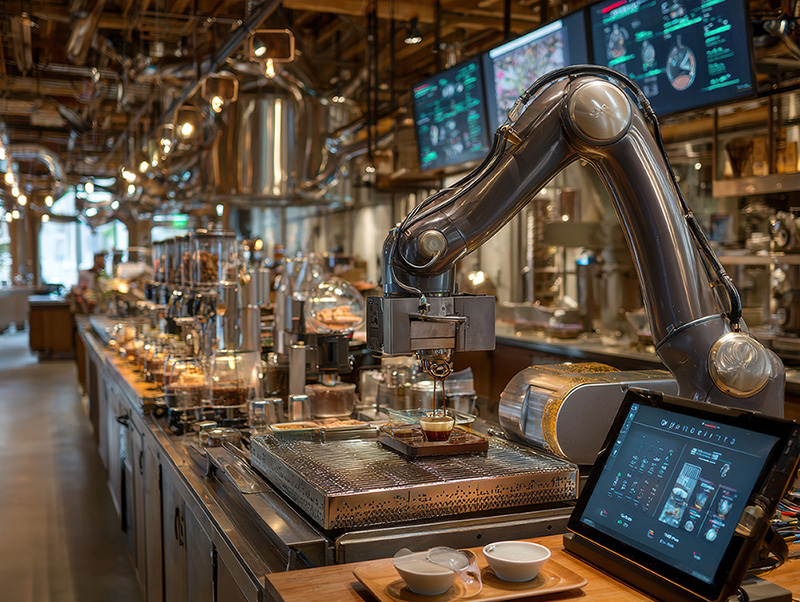
First, digitalization empowers full-chain upgrading. The lodging and catering industry should take digitalization as the core and achieve comprehensive upgrading from front-end onlineization to a middle and back-office digital middle platform. Smart hotels need to use big data for precision marketing; smart restaurants can use AI and intelligent equipment to reduce costs and improve efficiency.
Second, green transformation cultivates long-term competitiveness. The industry should implement the green consumption concept of the Plan and adopt measures such as energy-saving renovation and waste reduction. Green transformation is a competitive weapon for winning consumers and the market, and enterprises that obtain certification will gain a first-mover advantage.
Third, brand-based strategy enhances value creation. Lodging enterprises should build brand loyalty through membership and marketing; catering brands can tap cultural IP and follow a premium pricing route. Leading enterprises should go global and export Chinese-style culture, building international national brands.

IV. Scenario Revolution: Cultivating New Consumption Business Forms, Models, and Scenarios
The Plan keenly grasps the evolution trend of consumption forms and takes expanding new consumption scenarios as an important focus, vigorously promoting the integration of commerce, tourism, culture, sports, and health, and developing cross-sector integrated consumption such as "food +" and "accommodation +." This opens broad space for the lodging and catering industry to break traditional boundaries and achieve value fission.
First, deep integration of "catering + culture and tourism." Embed catering into tourism routes, create food-themed travel, and transform cultural experiences through activities such as markets and educational travel. Encourage catering enterprises to enter scenic areas, open experiential restaurants, and increase consumption repurchase rates.
Second, "accommodation + health and wellness" health consumption. Rely on resources such as hot springs and forests to develop wellness hotels, with supporting services such as healthy meals and physiotherapy, upgrading accommodation into physical and mental healing solutions.
Third, community consumption and nighttime economy. Optimize the layout of community consumption, participate in the "15-minute convenient living circle," and provide all-time services such as breakfast and late-night canteens. Create immersive night markets and other nighttime landmarks, extend service hours, and enrich consumption content.
Fourth, new digital immersive scenarios. Expand immersive consumption, use AR/VR and other technologies to innovate the dining experience, and develop virtual-real integrated scenarios such as virtual banquets. This requires enterprise innovation and industry chain collaboration to build a consumption ecosystem.
V. Consolidating the Foundation and Strengthening the Base: Optimizing the Consumption Environment and Improving Institutional Safeguards
The consumption environment is the lifeline of the industry. The Plan devotes a special chapter to deploying the optimization of the consumption environment and institutional safeguards. Many arrangements directly address the pain points of the lodging and catering industry and remove obstacles for the healthy development of the industry.
In terms of building a reassuring consumption environment, the Plan proposes carrying out reassuring consumption creation, improving dispute resolution mechanisms, and requiring clearly marked prices and regulating prepaid consumption. Enterprises should operate with integrity, implement commitments such as price disclosure and advance compensation, and explore third-party fund depository and consumption insurance to resolve risks from the source.
In terms of the standards system and industry norms, the Plan emphasizes building a service consumption standards system, with associations taking the lead in formulating and revising group standards, using standards to drive industry improvement. In market regulation, it strengthens coordinated supervision and off-site supervision, reduces intervention, and lightens the burden on enterprises.
In terms of factor and resource safeguards, the Plan implements paid annual leave and financial support, releases the consumption potential of lodging tourism and family dining, and alleviates corporate cash flow pressure. At the same time, it strengthens vocational skills training, deepens school-enterprise cooperation, and incorporates training in digital operations and other areas to solve talent shortages and the contradiction between quality and efficiency.
【Conclusion】The "15th Five-Year Plan" for Expanding Consumption anchors the main course of high-quality development for the lodging and catering industry: "quality-oriented, digital, green, and integrated." Policy effects will not automatically translate into industry performance. Only by internalizing the spirit of the Plan into corporate strategy, refining it into operational management innovation, and transforming it into excellent experiences perceivable by consumers can we truly seize the opportunities of the times. The lodging and catering industry should take the implementation of the Plan as an opportunity to continuously cultivate internal strength and, in the historical process of upgrading and improving service consumption, achieve a dual leap in industry value and social benefits, making new and greater contributions to expanding domestic demand and serving people's livelihood.
Source: China Hospitality Association
Image source: copyright image library