

 back

Ginger is the most inconspicuous yet indispensable item in the kitchen. It enhances flavor in stir-fries and dispels cold in soups; every household keeps a piece on hand. But in recent years, news about “sulfur-treated ginger” and “excessive pesticide residues” has emerged every few days, making many people uneasy when buying ginger: Is this piece of ginger actually clean?
Recently, the large ginger from Jianliyuan Qingdao Ecological Farm has come to market. Over more than eight months from planting to harvest, the farm has used an almost “clumsy” growing method to produce ginger that gives people peace of mind.
I. Good Ginger Starts with Good Soil and Water
Whether a piece of ginger is clean depends first on where it grows.
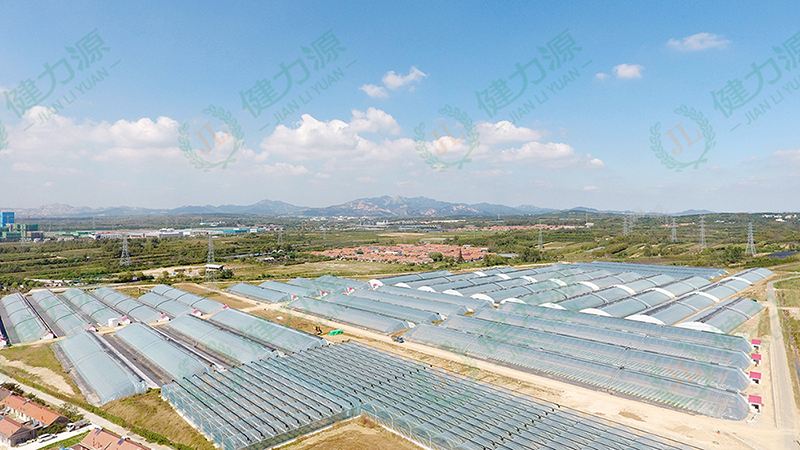
Jianliyuan Qingdao Ecological Farm is far from the main urban area, nestled by mountains and water, with contiguous modern solar greenhouses standing between green hills and open fields. Urban pollution cannot reach here; the water is clean, the wind is clean, and from the first day the ginger is planted, it grows on a clean foundation.
More commendably, the farm uses crop rotation and intercropping to care for the land, allowing it to rest and recuperate fully.
II. For Good Ginger, Seedling Cultivation Is Important
Before sowing each year, the farm does the “clumsy” work of seed selection: staff select plump, thick, high-quality seed ginger with intact skin from the previous crop for cultivation, ensuring the quality of large ginger from the source.
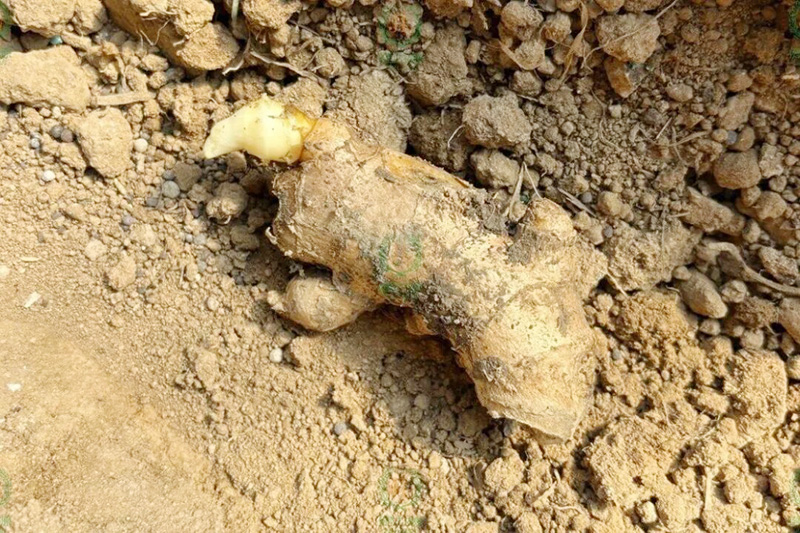
Before seedling cultivation, staff turn, sun-dry, and disinfect the seedbed in advance, apply decomposed organic fertilizer, and supplement nitrogen, phosphorus, potassium, and other medium and trace elements, laying a solid foundation for ginger seedling germination.
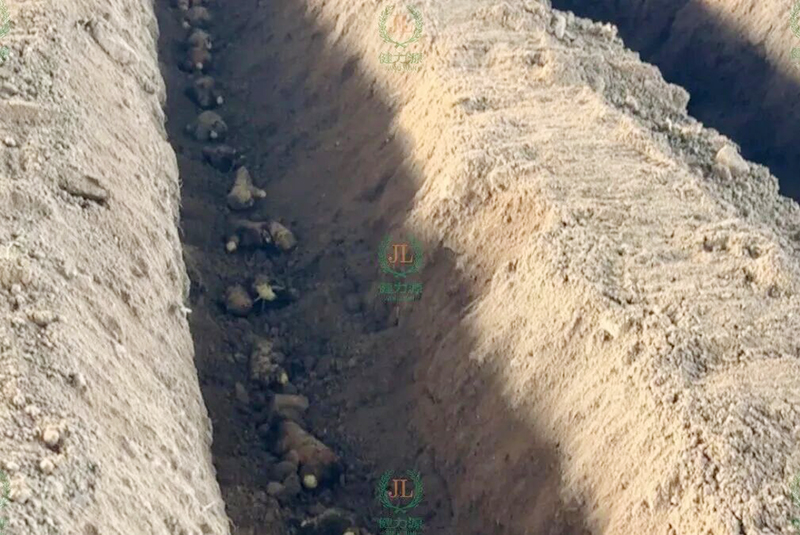
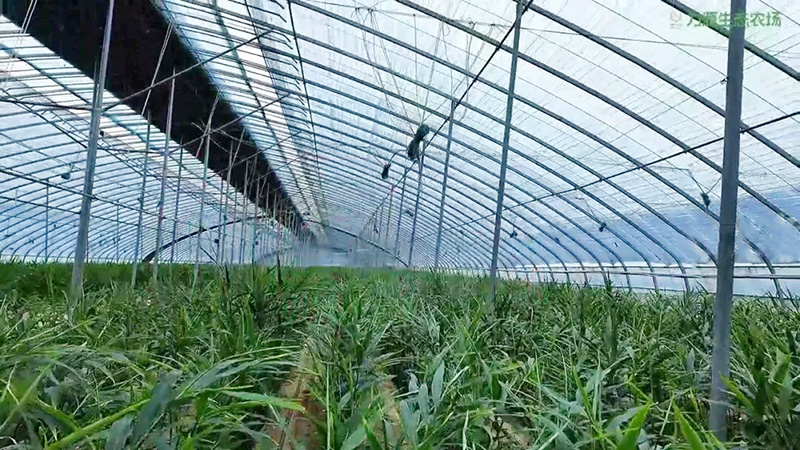
During seed ginger germination acceleration, no chemical agents are used throughout; instead, temperature and humidity control systems simulate the natural sprouting environment of large ginger, ensuring the greenhouse temperature remains at 22–28°C and humidity at 80%–85%, allowing ginger buds to sprout naturally and roots to grow more robustly.
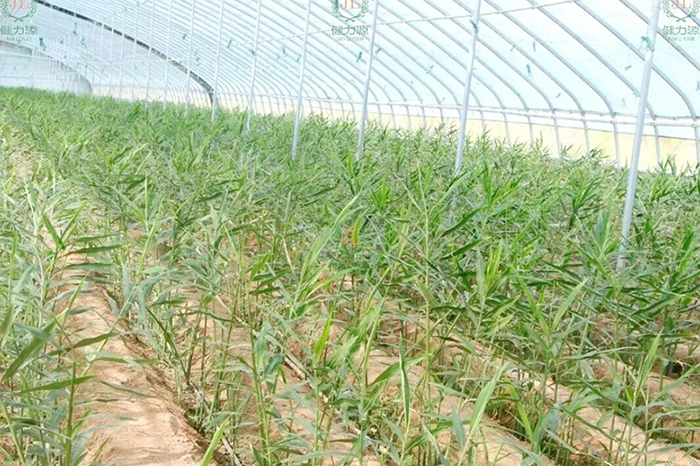
III. Reasonable Spacing Ensures Nutrition
At transplanting, the farm’s ginger seedlings are given much more “spacious” conditions than in ordinary ginger fields: row spacing of 70 cm and plant spacing of 20–25 cm, with strict spacing control to leave sufficient growing space for each ginger plant.
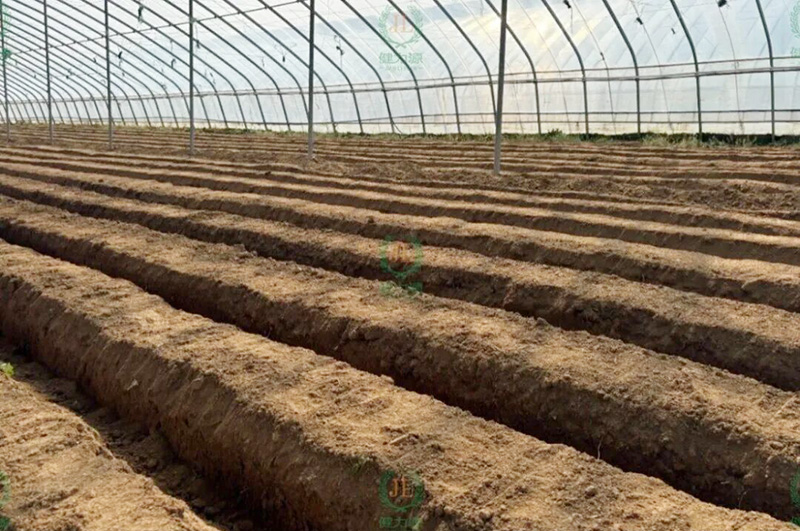
Water and fertilizer are equally particular. A supporting drip irrigation system precisely supplies water, avoiding waterlogging that could cause ginger rot; base fertilizer is applied at 1,000 jin (about 500 kg) of decomposed soybean fertilizer plus 500 jin (about 250 kg) of microbial inoculant per mu to improve soil structure; during the growing period, soybean organic fertilizer, microbial inoculant, and fish protein are top-dressed three times to provide comprehensive nutrition for large ginger.
All fertilizers are decomposed at high temperature, contain no heavy metals, and are safe with no residues.
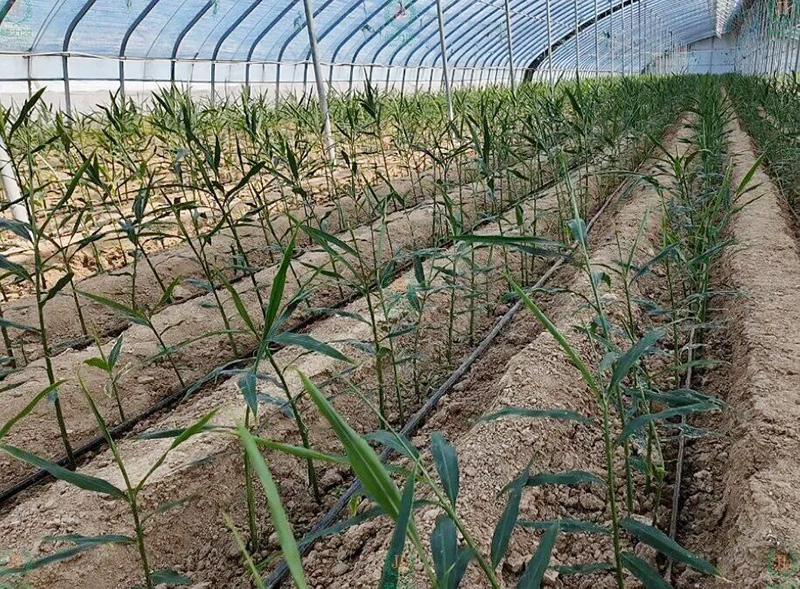
IV. Multiple Hillings to Care for Growth
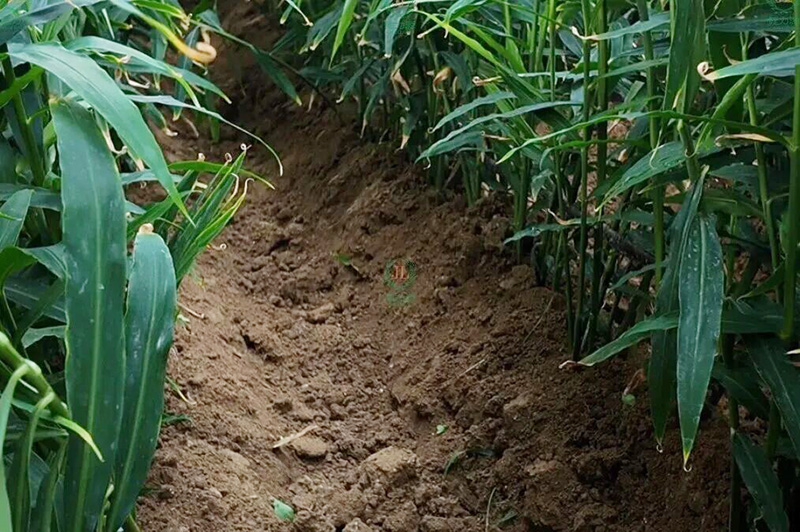
The rhizome of large ginger grows in the soil and requires careful “attending.” Based on the growth pattern of the large ginger rhizome, the farm carries out three to four rounds of intertillage and hilling in stages: shallow tillage and loosening when seedlings are 15–20 cm tall; thereafter, cover with soil once every 20–25 days, with the final hilling height reaching 15–20 cm, preventing ginger from turning green upon exposure to light and creating sufficient space for ginger expansion.
V. Rejecting Pesticides, Physical Pest Control
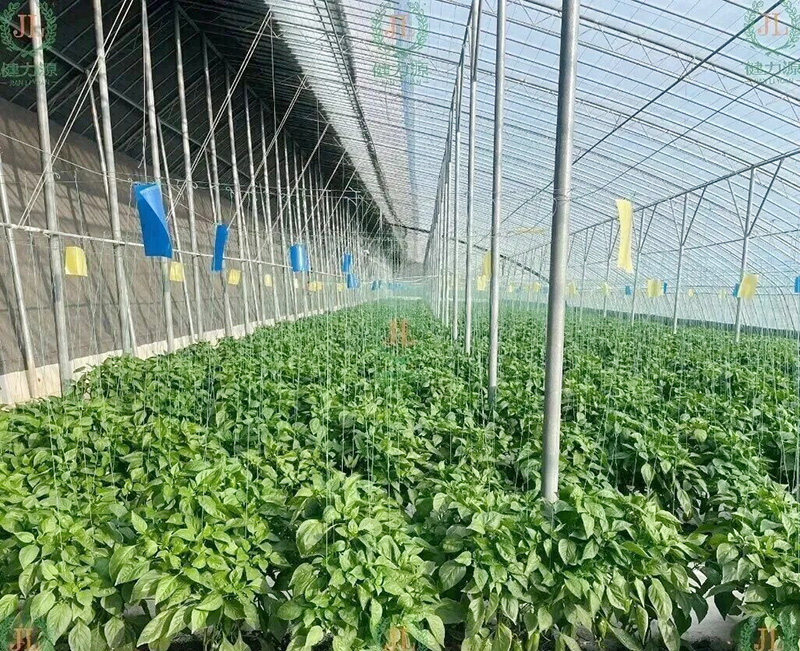
Ginger growers fear pests most, and also fear pesticides most. The farm’s pest and disease control has always adhered to a purely physical approach: high-density insect-proof netting is installed outside the greenhouses; inside, blue/yellow sticky traps and sugar-vinegar solution are used to trap and kill pests; at the same time, diseased leaves are removed and diseased plants pulled out manually, truly achieving no pesticide use throughout the entire process.
Although physical pest control is time-consuming and material-consuming, what it brings in return is zero pesticide residues, which is worth it.
VI. Manual Harvesting and Selection, Natural and Original
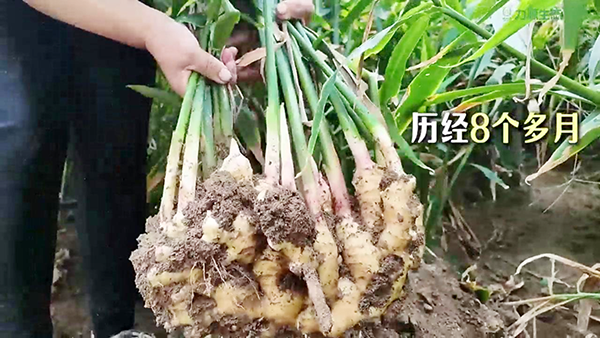
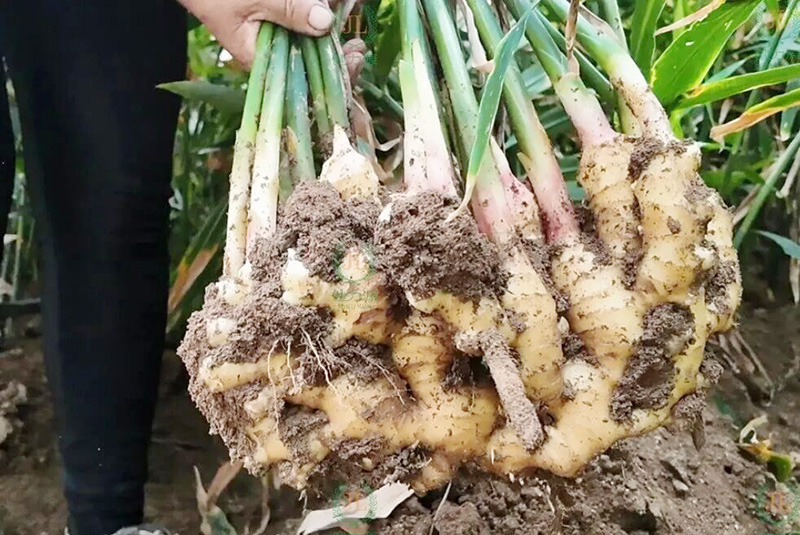
During the harvest season, farm staff use manual digging to pull pieces of large ginger from the soil, with moist soil still clinging to the roots. After harvest, manual grading and selection are carried out to remove thin, small, deformed, and rotten ginger pieces. All large ginger is dug and shipped fresh with soil—unwashed and unwaxed—precisely to preserve the natural protective layer on the ginger surface.
More importantly: no sulfur fumigation is used. The ginger is just as it grew from the ground, with a rich ginger aroma and authentic original flavor.
VII. 128-Item Testing, Zero Pesticide Residue Assurance
To ensure consumer food safety, after the farm’s large ginger was harvested, a third-party institution conducted 128-item special pesticide residue testing, and all results were “not detected”—authoritative testing with verifiable evidence is visible quality assurance.
Break open a piece of ginger, and the cross-section is bright yellow ginger flesh, with a pungent ginger aroma rushing out at once. More than eight months of slow work, the confidence from 128 tests, and the reassurance of that handful of soil are all hidden in this bite of fresh pungency.