back
back

To further enrich the dish matrix, improve the quality of group catering output, and consolidate the standardized production capability of specialty dishes, on August 22, the Customer Service Department of the Beijing Region organized a special dish training session on Cantonese roast meats. Each region selected key business backbone representatives to attend the training, focusing on the Cantonese roast meat product series to carry out hands-on teaching, dish tasting, and standard discussions. Zhang Chenglong, General Manager of the Beijing Region, and Ke Jianzhuo, General Manager of Guxiangyuan, attended and provided guidance on dish research and development, output standards, and market implementation.
This training centered on the core categories of Cantonese roast meats, covering multiple signature rice dishes and specialty dishes. At the training site, technical instructors from roast meat product manufacturers took “raw material handling - marinating process - heat control - precise cutting - sauce preparation - finished product assembly” as the main line to conduct full-process disassembled teaching, standardizing key parameters such as ingredient ratios, roasting time, and serving portions one by one, enabling trainees to systematically master the key technical points of classic roast meats such as lemongrass char siu, honey char siu, black gold char siu, Cantonese roast duck, and supreme roast goose.
The training display table featured an array of excellent works, combining color and aroma. The char siu was rosy and glossy with distinct layers; the roast duck and roast goose were crispy on the outside and tender on the inside, full of juices; the black bean sea bass chunks had a rich black bean aroma, fresh and tender, and well-seasoned. Various dishes were paired with rice, seasonal vegetables, braised eggs, etc., to present the final serving effect, with selling prices and gross profit references clearly marked, balancing taste presentation and commercial operation needs. In the tasting session, trainees expressed their views from dimensions such as product appearance, flavor layers, cost structure, and customer preferences, engaged in in-depth exchanges with instructors on operational difficulties, and actively explored the feasibility of applying the dishes in group catering scenarios.
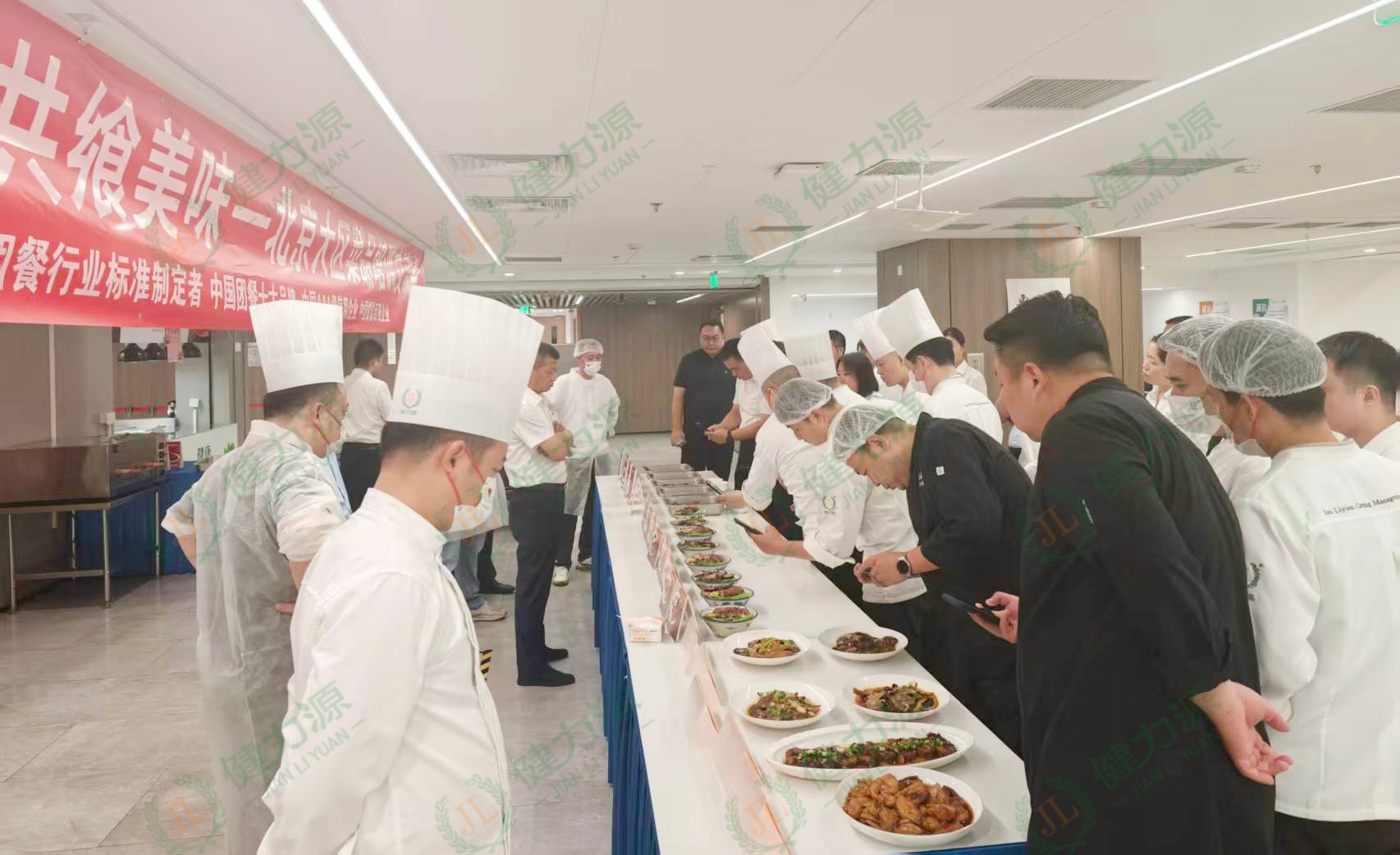
Chefs conducting on-site tasting and exchange
Zhang Chenglong, General Manager of the Beijing Region, and Ke Jianzhuo, General Manager of Guxiangyuan, observed the entire training process and all dish displays on site, carefully tasted various roast meat finished products, and put forward clear requirements for dish taste, appearance, and standardized implementation. The leaders pointed out that in the group catering track, local specialty cuisines are an important lever for improving the dining experience. Cantonese roast meats have a broad audience and high acceptance, and are worth promoting. At the same time, they required the trainee representatives to bring what they learned from this training back to their respective regions and do a good job in secondary transmission and implementation. They hoped that each restaurant, in the subsequent product introduction process, would not only remain faithful to the classic original flavor of Cantonese roast meats but also fit the efficient supply scenario of group catering, seek the best balance among quality, efficiency, and cost-effectiveness, and transform product advantages into market competitive advantages.
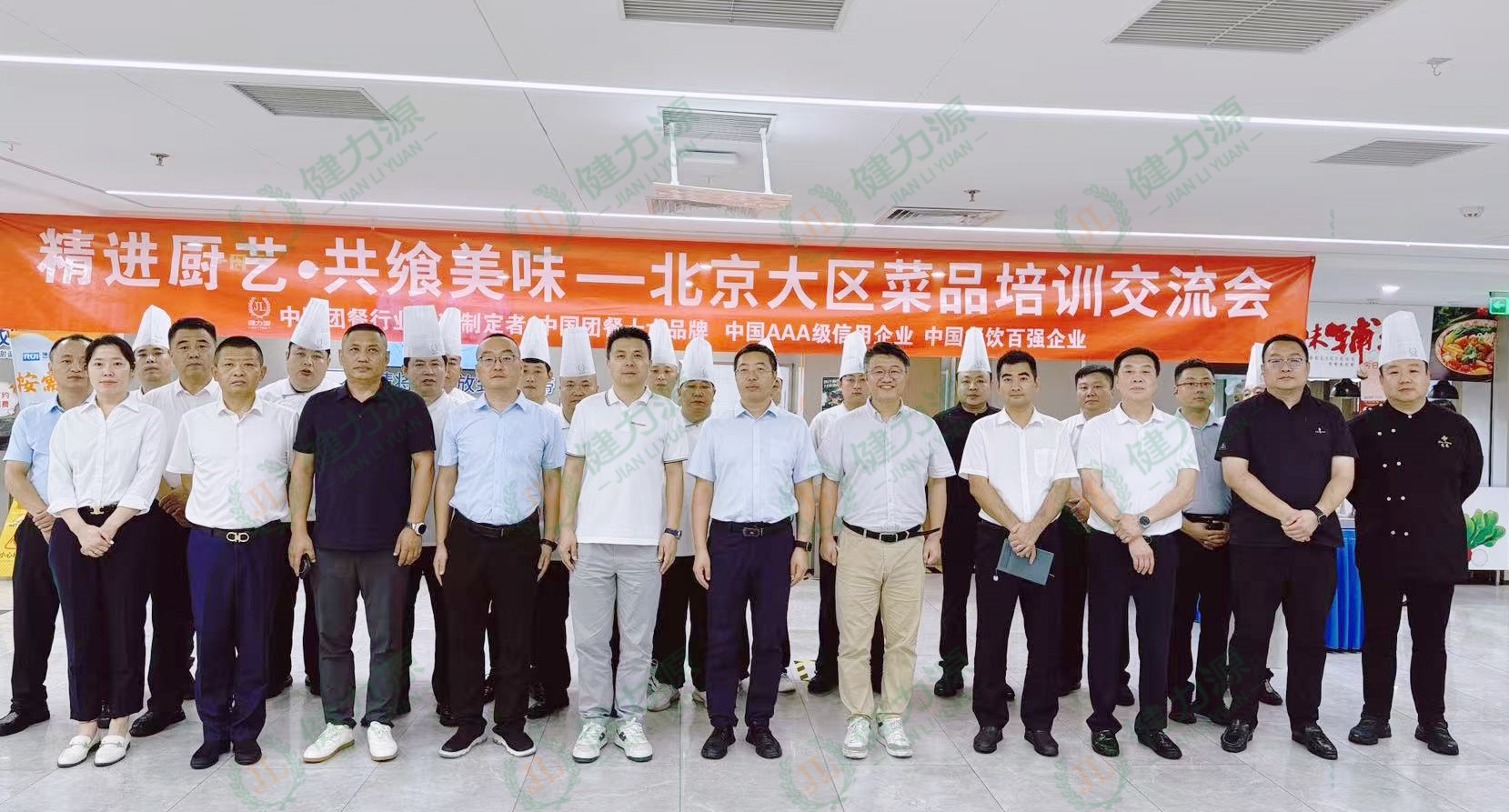
Group photo of the dish training exchange meeting
It is worth mentioning that the raw roast meat materials used in this training had already completed preliminary processes such as marinating and sauce preparation by the manufacturer before arrival. On site, they only needed to be roasted directly according to standard heat to be served, verifying the feasibility of the “de-chef-ization” supply model. Subsequently, the Group will explore an order model for the Cantonese roast meat product series, customizing according to customers' actual demand. Each restaurant can place orders and procure through the Guxiangyuan supply chain, thereby further reducing skill dependence, ensuring consistent taste, and achieving coordinated improvement of quality, efficiency, and benefits.
This special dish training was not only a concentrated study of local specialty cuisines but also an important practice for the Beijing Region to promote dish innovation and standardization construction. In the future, the Beijing Region will continue to deeply cultivate dish research and development, regularly carry out dish training and exchanges, launch more high-quality and down-to-earth specialty dishes, empower the upgrading of group catering services with craftsmanship, and bring richer and more diverse dining choices to the majority of diners.